Round Robin or Open Floor: Two Ways to Share a Discussion
Round robin or open floor? Compare how each format handles ideas, exposes differences, and helps a group move from separate views toward a shared decision.
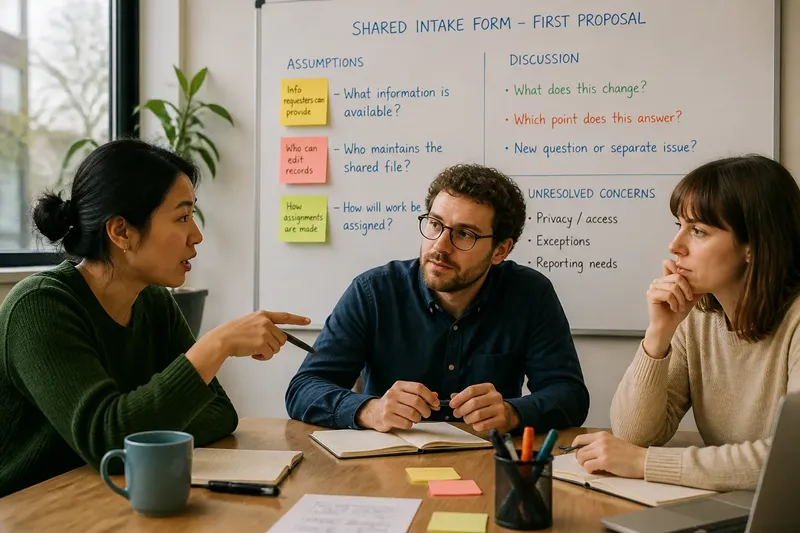
The first proposal is on the whiteboard, and the conversation immediately splits: one person spots a flaw, another offers a fix, and a third is still trying to work out what the proposal assumes. Choosing round robin or open floor affects more than who speaks next. It shapes how a group can compare ideas and turn different views into a shared direction.
A round robin gathers contributions in sequence. An open floor lets people respond as the discussion unfolds. Neither format produces shared understanding by itself; each gives the group a different way to make sense of what has been said. The useful choice depends on whether the work is collecting separate perspectives or putting them into conversation.
How do the formats handle different perspectives?
A round robin gives each participant an opening before anyone takes a second turn. That makes it easier to hear how people frame the question independently. The facilitator can record distinct claims, assumptions, or concerns, then show where views overlap and where they diverge.
The cost is that ideas wait in line. A participant may hear a point that changes their thinking but have to hold that response until the sequence ends. The group gets a set of contributions, but not necessarily a conversation among them.
An open floor lets participants build on, question, or revise one another’s ideas as they emerge. That can reveal connections that a sequence would miss. It can also blur distinct views: a confident response may absorb an earlier idea before the group has examined what was different about it.
To keep either format useful, distinguish the contribution from the interpretation. A facilitator might write “concern about who maintains the shared file” rather than “resistance to the proposal.” The first records an issue the group can examine; the second assigns a motive no one necessarily stated.
When should a group start with a round robin?
Use a round robin when the group needs a spread of independent starting points before it debates or combines them. This is especially useful when people have different roles or information, and the group wants to notice those differences rather than rush to the first workable answer.
Give the sequence a task that invites comparison: name one assumption behind the proposal, identify one condition it depends on, or state what evidence would change your view. Record answers in a shared document or on a whiteboard. Afterward, sort the notes into themes and ask which differences matter to the decision.
A round robin becomes less useful when the group treats every contribution as a miniature presentation. Set a clear response shape, such as one claim and its reason, and allow participants to pass. It is not worth designing an elaborate speaking ritual to make a short sequence feel lively; the notes and the later comparison are the useful work.
When does an open floor help ideas develop?
An open floor fits work that depends on exchange: testing a proposal, tracing the consequences of an assumption, or combining suggestions into a new option. Participants can make their reasoning visible and correct one another’s interpretations while the idea is still taking shape.
The facilitator’s job is less about assigning turns and more about preserving the thread. Ask what a comment changes, which earlier point it answers, or whether it introduces a separate question. A shared document can help: keep one area for the current proposal and another for unresolved concerns, so discussion does not turn every new thought into the agenda.
Open floor can also create the illusion of agreement. Several people may respond to the same point while another concern remains untouched. Before moving on, name the options or claims the group has actually considered and ask whether anything important is missing. This checks the shared picture, not whether everyone has reached the same opinion.
How can a group combine the two formats?
A useful sequence is to gather independent views, compare them, then let the group work on the connections. Start with a short round robin to surface assumptions or conditions. Put the contributions where everyone can see them. Cluster related points without erasing disagreements, then open the floor to examine the clusters.
Say a fictional planning group is considering a shared intake form. Its members have different starting inputs: one handles requests, one maintains the records, and one uses the form to assign work. The facilitator asks each person to name one assumption the proposal makes and writes down the answers. The notes reveal three distinct concerns: what information requesters can provide, who can edit records, and how assignments are made. The group then opens discussion to connect those concerns and revise the proposal. The observable result is a draft that addresses the three stated issues; the tradeoff is that the group spends less time debating each person’s first answer in isolation.
The sequence is not a formula for agreement. It is a way to keep the sources of difference visible while the group works on a shared idea. If discussion produces a new proposal, return to the notes and check which original concerns it answers and which remain open.
What should the facilitator track as ideas change?
Track the movement of ideas, not just the number of turns. A contribution may support a proposal, identify a condition, raise an objection, or suggest a revision. Those are different kinds of information, even when they all sound like comments in the moment.
- Observation: Several comments use different words for the same concern. If they point to one underlying issue, then group them under a shared label; otherwise, keep them separate so the distinction is not lost.
- Observation: A proposal depends on an unstated assumption. If the group can name and examine it, then record the assumption beside the proposal; otherwise, mark it as unresolved rather than treating it as accepted.
- Observation: One comment appears to answer an earlier point. If the connection is accurate, then link the notes and ask what the response changes; otherwise, ask the speaker to clarify the relationship.
- Observation: A discussion produces a new option. If it addresses a recorded concern, then update the shared draft; otherwise, add it as a separate option for comparison.
- Observation: The group repeats a disagreement without clarifying it. If the dispute concerns different goals, then record those goals separately; otherwise, identify the specific claim or condition that needs examination.
- Observation: A recap makes two views sound identical. If participants confirm the wording, then keep the combined note; otherwise, restore the difference in their terms.
These decisions help a group make a common account without pretending that every contribution means the same thing. They also give participants something concrete to correct: a note, a connection, or a draft, rather than a vague impression that the conversation went well.
How can you tell which format the work needs?
Choose based on the kind of thinking the group needs next. If the immediate job is to collect independent views, a round robin makes those starting points easier to compare. If the job is to test or combine ideas, an open floor gives participants room to respond. If both jobs matter, use a brief sequence first and open discussion afterward.
After the discussion, inspect the shared record. Can the group distinguish the original views, see how they relate, and identify what the current proposal does not yet resolve? If not, the problem may be less about the format than about how the group captured and interpreted its ideas.
For round robin or open floor, the practical test is whether the format helps the group carry differences forward into its shared work. A concise record of what changed—and what did not—often matters more than a smooth conversation. Smoothness is pleasant, but it is a poor filing system.
What do people ask about round robin or open floor?
Does a round robin create shared understanding?
Not on its own. It collects separate contributions, which the group must then compare, question, or connect before they become a shared account.
Can an open floor change someone’s view?
It can make ideas easier to revise because participants can respond as points emerge. The group should still record what changed and what remains disputed rather than infer agreement from a lively exchange.
Should the facilitator combine similar comments?
Only when the wording preserves the meaning of each contribution. If the distinction is uncertain, keep the notes separate and ask the group whether they belong together.
What if the group has several different interpretations of the proposal?
Record the interpretations separately, then ask which assumption or wording produces the difference. The group can clarify the proposal without treating disagreement as a failure to understand.